Author Archives: Ken Ockenden

Unknown's avatar

About Ken Ockenden

I'm interested in profiling urban spaces and the travel experience endured to get to them. They all have a character good, bad or indifferent. I focus on the good and the bad.

Noosa Way of Life

Noosa is in Queensland, Australia, on the aptly named Sunshine Coast. If you can ignore the bizarre Queensland politics this is a good thing. Noosa exists in its own Biosphere Reserve (recognized by UNESCO) which was created so the good people of the shire (yes a shire just like the hobbits) can protect their environment and live a sustainable life. To reinforce its individuality, Noosa also  de-amalgamated itself from the existing political structure to enable self-rule. Yes, Noosa is a bit different – it has decided to go its own way and bugger everyone else. This is a wonderful thing and may make Noosa the single best place to live in the known universe. Let’s see why.

A Brief Description

Noosa is mainly two places – a beach place and a river place. The total population is about 50k and is capped at that level. To live in Noosa you pretty much have to wait for someone to move out. There are also 2.2m tourists a year so as a visitor you will have plenty of company.

The Beach Place

This is called Noosa Heads and is basically a peninsula with an ocean on one side, a river on the other and parks at either end. The beach is the best in Australia and has many low-rise expensive apartments looking out upon it.  The peninsula has a street running down the middle lined with restaurants and boutiques. The rich people stay here.


The River Place

This is called Noosaville and is focused on the river and on man-made canals lined with expensive houses. It also has a lake. Noosaville is not a cheap alternative to Noosa Heads but has a more casual atmosphere. It also has many restaurants and shops, some of which are not boutiques. The less rich people stay here.
In between heads and ville there are canals, beaches, parks and many resorts.

So whats the big deal? Noosa is attractive but so are lots of other places, why is it better?
Well, because it combines the best bits of what most of us want in a place, together with quirky stuff that raises it above the common horde.

The Best Bits

Parks

Parks are common – big, small, national, beach, river, island, they are everywhere. Trees are more prominent than buildings and wild life has the right of way.  One park deserves special attention – Noosa National Park. This sits at the end of boutique street at Noosa Heads. It is beautiful, has many beaches, many surfers and whales cruising past. There are many excellent tracks through the forest and along the coast, plus there are koalas in residence.

Buildings

When every other tourist destination was going high rise, Noosa said no to anything over 4 levels. And it’s expected they are covered with trees or whatever else can grow on them. Noosa became home to the invisible building. This, together with a vast network of paths and access-ways, means the urban area is built to a human scale.

Climate

Kind of perfect. It doesn’t get too cold or too hot, it rains enough but not that much, it does not get overly windy and the sun shines most of the time.

Water

There is lots of this. You have the river which you can boat and fish on and visit everglades just like Florida. There are lakes you can do lake stuff on. Probably the most significant watery thing though is the ocean. There is lots of this and it comes with whales, dolphins and many other fishy things. It also has numerous beaches and islands to visit and lounge about on.

The Quirky Stuff

Noosa Pace

You know when your read all the tourist crap about how when you arrive at some location, time slows down and you just relax into a holiday stupor, like this is every travellers dream. The way the world used to be (before all these bloody tourists arrived). Well, Noosa  has that vibe, you just know stuff sort of moves into slow motion mode. This dosen’t mean things don’t happen, just that they happen in a more relaxed way.

Roundabouts

The good people of Noosa decided traffic lights are a tool of the devil and so do not have them. They have roundabouts. So many roundabouts they are uncounted. Many roads can go into a roundabout and these roads can have many lanes. Some roads go nowhere, some go somewhere, some lanes make you go right, some left and some straight through. There are also some road signs, some have a name on them, most just say “all other destinations”. There are no standard roundabouts thus no standard rules, it’s a free-for-all and great fun for motorists. Since you rarely know where you are going, you see a lot of Noosa! If Noosa was a less wonderful place this could be a problem.

Rubbish Bins

There are many of these, they are very big, they are emptied and clean. Because of this Noosa is generally free of stuff on the ground that should not be there.

Picnic Tables

They are everywhere a picnic table needs to be, clean, well-maintained, some in  shade houses, some with barbecues adjacent, most have people attached.

Noosa

Any one reading the above could easily say –  big deal I’ve been lots of places that have that stuff.. so what the? The what the is that it all works and the Noosians really care about their place. The rubbish bins get emptied all the time, the public areas are cared for every day, the picnic tables are actually clean and don’t fall apart when you sit down. Everything works to the best of the locals’ ability to make it so.

The beauty of the location, the epic climate, the absolute protection given to the environment and people who seem to really care.

Noosa – Just Relax – It’s The Biosphere Baby

Road Trip – Auckland to Paihia


The trip to Paihia is the same as the trip to Kerikeri, so if you have an interest in this aspect of the journey please read my post ‘Auckland to Kerikeri’. The variation is that Paihia is on the Pacific coast about 20 km east of Kerikeri.
Paihia is like Kerikeri’s evil twin, it’s where you go looking for a good time. It is also a place with a split personality, one side is cultural history, the other is cultural hedonism.
History
Paihia is sited in the Bay of Islands, a stunningly attractive coastal area with many islands.

At one time it also had whales. Unfortunately for the whales they also made good oil. During the eighteenth century lots of people turned up to hunt them. These people were not known for their social niceties. Their degenerate behavior also attracted missionaries, who tried to alter their behavior. It didn’t work, but the whalers soon ran out of whales so went somewhere else. The missionaries stayed and developed a reasonably amicable relationship with the Maori people who owned the land. The British Government of the time decided that New Zealand was worth having as a colony. They sent out a guy called Hobson who together with the missionaries negotiated with the Maori chiefs to transfer their land to Britain in return for having the rights of British Subjects. The importance of this to Paihia is that the treaty between Maori and the British was signed at Waitangi, which is a suburb of Paihia. This makes Paihia the cradle of civilisation for Europeans in New Zealand. Maori already had a perfectly good civilisation and clearly did not understand that British Subjects had crap all rights. Thus the treaty ended up as the usual colonial land grab. Maori understood this pretty quickly and various wars were fought and lost. Needless to say Waitangi is a focus of Maori discontent over European conquest.
Not withstanding the above Waitangi is a delightful place with a great museum, nice bush areas, golf course and hardly any whalers.
Hedonism
Paihia was the place to go, then it wasn’t, then it was, then it wasn’t and currently it is on the rise again. It’s varying popularity is evidenced by a weird collection of hotels and motels whose architecture reflects the worse aspects of what was trendy during the up periods. This makes it kind of interesting. The glorious location makes this a magnet for two distinct groups of people, rich ones and backpackers.
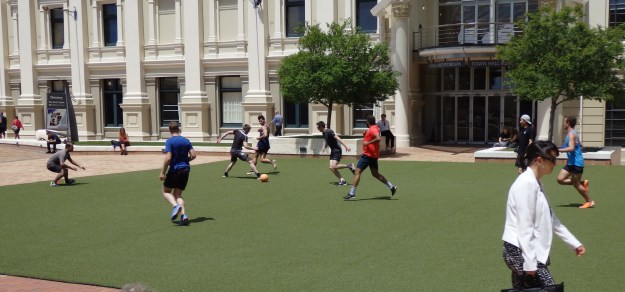
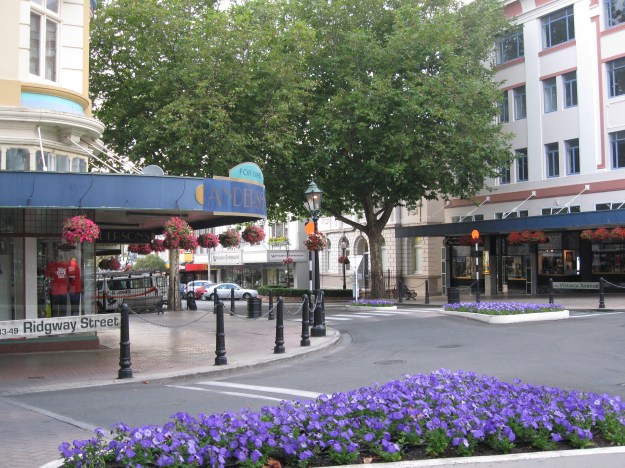
The rich ones arrive on boats and helicopters and fish for marlin. Not a particularly interesting group unless you are part of it. The key to Paihias vibe is the back packer crowd. This is a very large demographic easily outnumbering all other visitors and probably residents as well. The backpacker enclave is a site to behold, a couple of streets filled with converted motels, hotels, and other undefinable structures, interspersed with bars, restaurants and clubs.

If you want to practice your language skills this is the place to be, just make sure its early in the day when people are reasonably coherent. Backpackers travel in a variety of ways, but the most popular methods are camper vans and old cars. When in Paihia you will notice these clustered in car parks like gypsy encampments. When leaving Paihia you will be in a very long line of traffic, at the front will be a camper or car full of backpackers going 70km at full throttle. This is not so much of a problem as it may seem because you will have lots of time to enjoy the fantastic Bay of Islands scenery.

Road Trip To Thames

Auckland to Thames

It takes about one and a half hours to get to Thames. The highway is half an hour of motorway, flat with the usual industrial buildings of varying quality. Basically you see the arse end of everything filled with all the crap  building occupiers don’t want out the front. The remaining hour is rural highway, flat with animals eating grass, and trees.

Roadside Attractions

There is a palpable feel of tragic desperation hanging over some retail businesses. You know the type, fading signage, fit-out last updated in 1950, stock that looks like it has been assembled from local garage sales. When the business is a food outlet it is in some way even worse, is the food last weeks or last months, do they wash the dishes, are these mouse droppings on the floor or mummified fly carcasses. Once you leave the motorway and turn left on the rural road to Thames you have the opportunity, as we did, to visit the place pictured on the left. Further down the road we stopped at the place on the right.

Thames

People in Thames dug lots of holes many years ago and in return for this labour they got gold. This lasted long enough to pay for many grand buildings and to develop a heavy engineering industry. The engineering expertise meant the gold miners could have many big steel things to dig even more holes. Once all the holes were dug the gold ran out and Thames immediately became a place where no one wanted big steel things anymore. Lucky for Thames cars were discovered and the skills developed to make steel stuff could be applied to building Toyota’s instead.

Thames is enjoying a new gold rush, This does not involve mining gold, but a much easier activity, mining Aucklander’s!  Because Thames was once biggish and richish it has a fine collection of run down grand buildings which can be purchased for nothing and rebuilt to look like they are in Ponsonby.  Aucklander’s love this stuff and will spend unending volumes of money in this activity. This expenditure flows into the local economy making Thames a wealthier place. Everyone wins.

So – What Else do you do in Thames?

You ride your bicycle on the railway, which like many railways these days has no tracks. In this way you can get places, achieve fitness and not be flattened by a train.

You practice witchcraft. Thames seems to have an affinity with the occult. There are a large number of practitioners of the dark arts who can help you with life’s challenges.
Eating is also a popular pastime. Thames is blessed with an extraordinary number of large bakery/cafes catering to these with high calorie intake requirements. I did not see any bicycles parked outside these establishments.
Thames has many interesting boutique shops and narrow furniture stores to satisfy expenditure needs. But, what about cruising a mall that would not look out of place in a zombie apocalypse movie. Yes there is one available, admittedly on my visit there were minimal numbers of the undead around but given the quality of the remaining stores this was not surprising.


Thames is a gem. It has all the basic necessities to ensure its residents and visitors have what they need. But the big bonus, which gives it that added zest and makes it more interesting than other towns, is its unique sense of local weirdness. Hopefully this remains as Thames signature dish.

Kerikeri Road Trip

Auckland to Kerikeri

On the road again. Kerikeri is 250 km north of Auckland. Twenty km of good highway, 230km of goat track. Most of the goats are Aucklanders escaping the city for beach settlements where they can pretend they don’t live in Auckland. Think of the Aucklanders as a fungal disease slowly spreading across Northland with no cure.

On the Way

Warkworth has a river, three sets of traffic lights and a new McDonald’s.

Wellsford has a main street with enough traffic to create its own ozone hole and a surprising local enthusiasm for do it yourself surgery.

Whangarei

This is as big as it gets in the north. Whangarei has four lane roads, an actual CBD, a trendy riverside area with a clock museum and bad guys hanging out in the hood. Despite these attractions the goal is Kerikeri so Whangarei will have its time in the sun in a later blog.

Kerikeri

This is a small town with big attributes. It is a middle class european suburb plunked into struggle class brown Northland. It has the obligatory cafe/cinema, weekend farmers market, boutiques with proprietors who do it for fun not money and two supermarkets so upmarket they would fit into the trendiest Auckland suburb. In other words it is nice.
What do they do here? They mostly sell real estate. Kerikeri has more land sharks per resident than anyplace I’ve ever seen. In addition Kerikeri does history, horticulture, the best chocolate in the world and stacking rocks on top of each other.

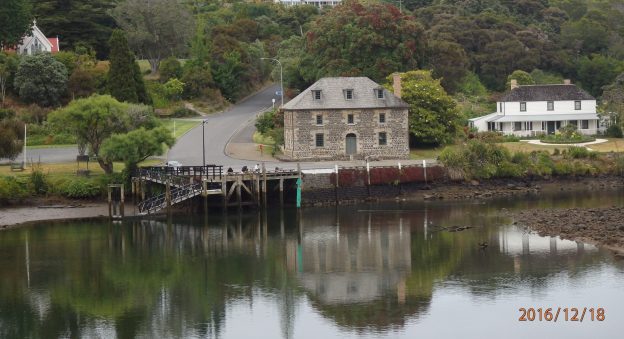
Scenically there is a lovely river flowing through into an inlet, on the shore of which sit the oldest wooden and the oldest stone buildings in New Zealand. The buildings are interesting in a “wow these buildings are old” kind of way.

Luckily there is also a cafe and a restaurant. You will probably spend more time here than you will examining the providence of the old structures.
If you like living in a trendy upmarket suburb with a 250km commute to Auckland Kerikeri is for you.
I could live there.

The Return Trip

This is a repeat of the up journey but with a detour to:

Waipu – Why not!

This is a settlement of Scottishness rampant with representative symbols. It has a museum featuring Scotts stuff, highland-games, and many pictures of kilt people. It is nice and I understand why the people of Scotland packed up their bagpipes and came here.

Waipu – Auckland

Nothing of interest here….


 Wellington Road Trip

Auckland to Wellington Return

Despite the recent earthquake damage Wellington is our destination of choice for a brief holiday before the madness of Christmas engulfs us. The trip is via the main highways with a stop in Taupo on the way down and stops in Whanganui and The Chateau in Tongariro National Park on the way back.

Auckland to Taupo

It constantly amazes me how getting out of Auckland lifts the spirits. It’s not that Auckland is bad it just gets large city oppressive. Well, bugger off traffic and people we are off to Taupo. The road is mostly through farming areas, heavy on the dairy, light on much else. Taupo itself is surrounded by forest, which is a contrast to cows.

OLYMPUS DIGITAL CAMERA

Lake Taupo

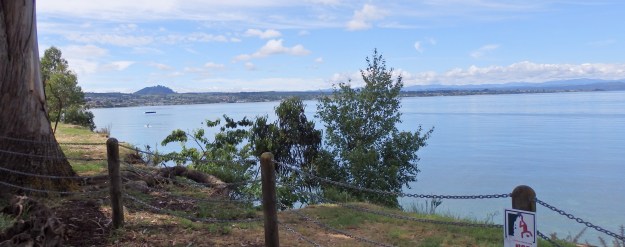
The lake is the thing, large and blue with volcanic mountains on the backdrop. Taupo is very big on outdoor sporting stuff and on our arrival every car or person seemed to be connected to a mountain bike. Taupo is also a bit of a party animal, lots of restaurants and bars together with attendant backpackers. However even the most fueled up party person could not be impressed by the natural beauty of this place.

Taupo to Wellington

After returning to winter conditions in Taupo it was nice to hit the road toward Wellington, especially since the forecast was for sun and warmth. The main highway out of Taupo is essentially a goat track by normal road standards. Since there are few places to pass speed is governed by the slowest vehicle in front (normally a camper van or mentally challenged Toyota Prius driver). Does give the chance to view the mountains and lake which really are beautiful.

Plateau

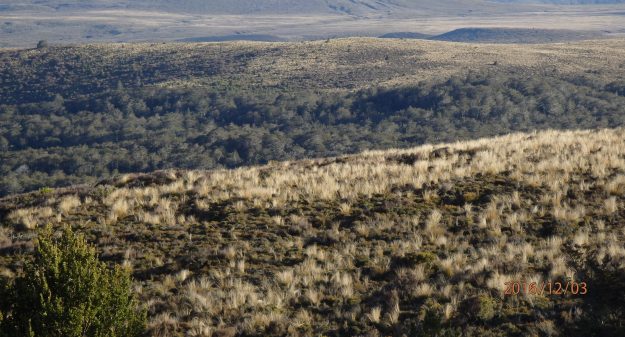
Brown Twiggy Stuff

Unfortunately this gives way to alpine plateau which is brown with twiggy things growing on it as far as the eye can see. Would be ok but there is someone up ahead herding their goats with a camper van moving at the pace of the slowest animal. Once off the plateau into green undulating country which is initially pretty but at goat walking pace gets very repetitive. After what seems like several days we hit the road into Wellington. This pretends to be a motorway but also has traffic lights which present significant challenges at 100 km/hr.

Happy Times in Petone

We stay here. Petone has it all, shops called boutiques, gastro pubs, cafes with weird stuff hanging on the walls and Pak ‘n Save. It also has an esplanade with beach, train to Wellington CBD in 15 minutes and, essential in all quality suburbs, an art house movie theater. But there is a mystery attached to Petone and this is it, a surprising volume of the residential stock is really shoddy.

OLYMPUS DIGITAL CAMERA

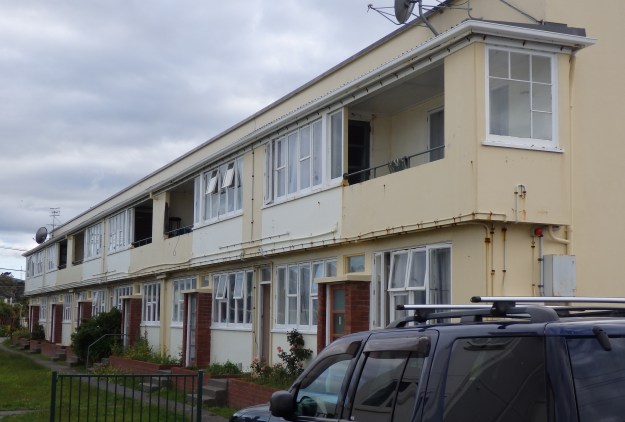
Petone: Apartment Life

Streets of elderly houses which appear to have had their last maintenance cycle completed in 1960. Unlike gentrified areas in suburbs of a similar type Petone looks like a place where people live to have a life rather than live to support their property dependent. This is a wonderful thing.

Wellington Yah!

So, Wellington has the wind thing and the earthquake thing and the politician thing. All irritating in different ways, but what is not is the CBD urban environment. Wellington is so far ahead of the other major cities (looking at you Auckland and Christchurch) that it’s laughable to even compare them. I will anyway. Auckland – struggling convenience and two dollar shops interspersed with cafes and an occasional “quality retailer”. The quality retailers are mostly confined to easily defensible precincts so their infrequent customers do not have to share space with actual Aucklanders. In terms of urban environment – the things you walk on, touch and see Auckland has mostly covered with black granite and randomly dumped street furniture on it for variety. The efforts at renewal on the harbour are generally either sterile (Viaduct and Wynyard) or just bad (Princess and Queens wharfs). It is a bit mean to focus on Christchurch given the earthquake and rebuild but at least it has a chance to resurrect itself. Unfortunately from what I have seen and heard the CBD is still mostly a wasteland with a few buildings tossed in so everyone can pretend stuff is happening. A work in progress so no further comment.

Wellington

Wellington Central: Fun Times

Ok, so what has Wellington got. No crappy black granite for one. Wellington is organic, it has developed a streetscape consisting of a variety of materials, small parks, lots of public art and people focused spaces. It is intimate but not suffocating. People are rewarded by walking, they see and experience lots of stuff, both weird and traditional. Retail is vibrant, well maintained and even the ordinary shops have an upmarket feel. You will struggle to find a two dollar shop or dodgy convenience store.

Wellington to Whanganui

Once out of Welly the road is ok with a surprising number of passing lanes. This allows you to get to Whanganui quickly. This is a good thing. On the way Otaki has outlet stores, Foxton has a windmill and Levin has car sales yards.

Whanganui

Stop everything and move to Whanganui. This place has everything. A river with a real steam paddle boat. The longest elevator through a rock in the world. The  most affordable beach-side suburb in New Zealand (and Australia and probably the southern hemisphere). Easily the biggest dog food factory in the country. More glass blowers than bureaucrats. As if these advantages aren’t enough the real biggie is this: Whanganui has more epic buildings in two square kilometers  than all the other cities in the North Island (excluding Napier) combined.

img_1972

Epic Whanganui

Yes it really is that good. And, as if it couldn’t get better most of these epic buildings are empty. So heaps of room for every one to move into.

Whanganui to Chateau Tongariro

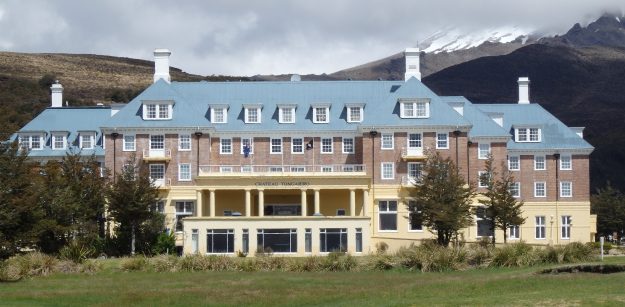
Hills and sheep, road mostly goat track per description in Taupo to Wellington except with less traffic. Chateau is a brick pile built in 1929 in the style of a…… Chateau. Has pretensions toward the premium end of market which it kind of fulfills.

Chateau Tongario

Chateau Tongariro: Imposing Brick Pile

Surrounded by mountains with steam coming out and sirens to let you know you have to run really fast when the steam turns to lava. Best thing is watching all the people walk up and down the mountain using stick things to prop themselves up.

Chateau to Auckland

Back across the brown plateau with bush stick things growing everywhere. No traffic until we hit the main highway into Taupo where we had to put up with the usual slow crawl. Probably the same goat herding camper vans we met on our way down. Taupo to Auckland easy run until usual Auckland traffic jam which is pretty much normal 24/7. It’s almost like the city is saying I’m so important that I can make your travel a misery any time I like and you have to put up with it. Welcome Back.

Slide Show: Pictures Taken Along The Way

This slideshow requires JavaScript.

Urban Liveability – Melbourne – October 2014

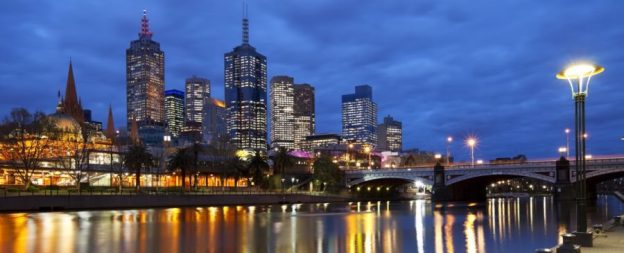
I asked my self a question while on holiday in Melbourne – why is this city almost always placed on the top 10 list of  ‘liveable cities’ regardless of who is publishing said list?  Also, while I’m thinking of it,  why are these lists composed entirely of large cities (are there no small livable cities?) Another interesting point, while I’m on the subject, all of these livable cities seem to be  built in the western tradition (CBD and suburbs of decreasing density on the way to rural urbia). Suppose there is nothing else to choose from, or more likely a limited choice of who will pay the bills.

Back to Melbourne, it fits the model, but what makes it stand out?

Surprisingly Melbourne has only one thing I could identify which makes it different from any other city fitting the traditional liveable model.

Drum roll – this is it:

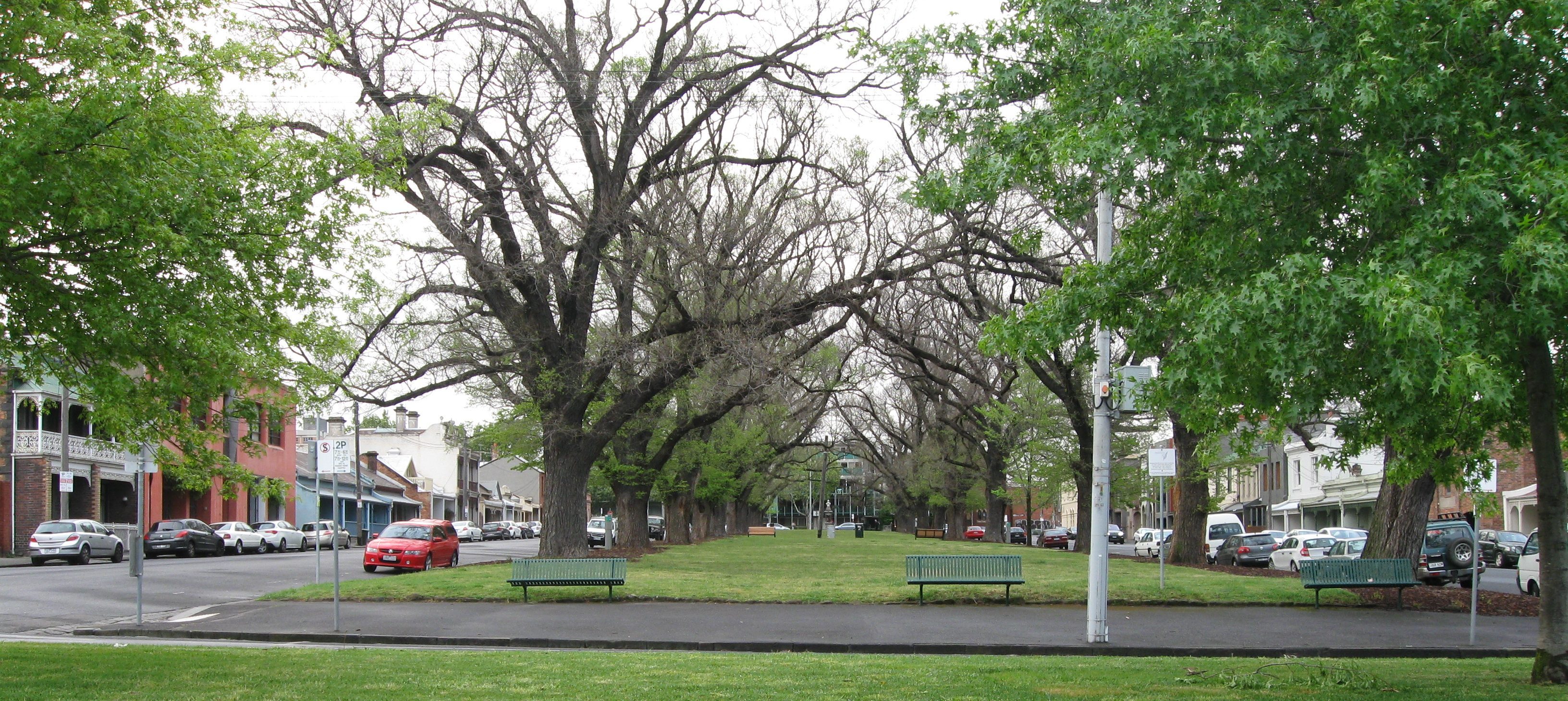
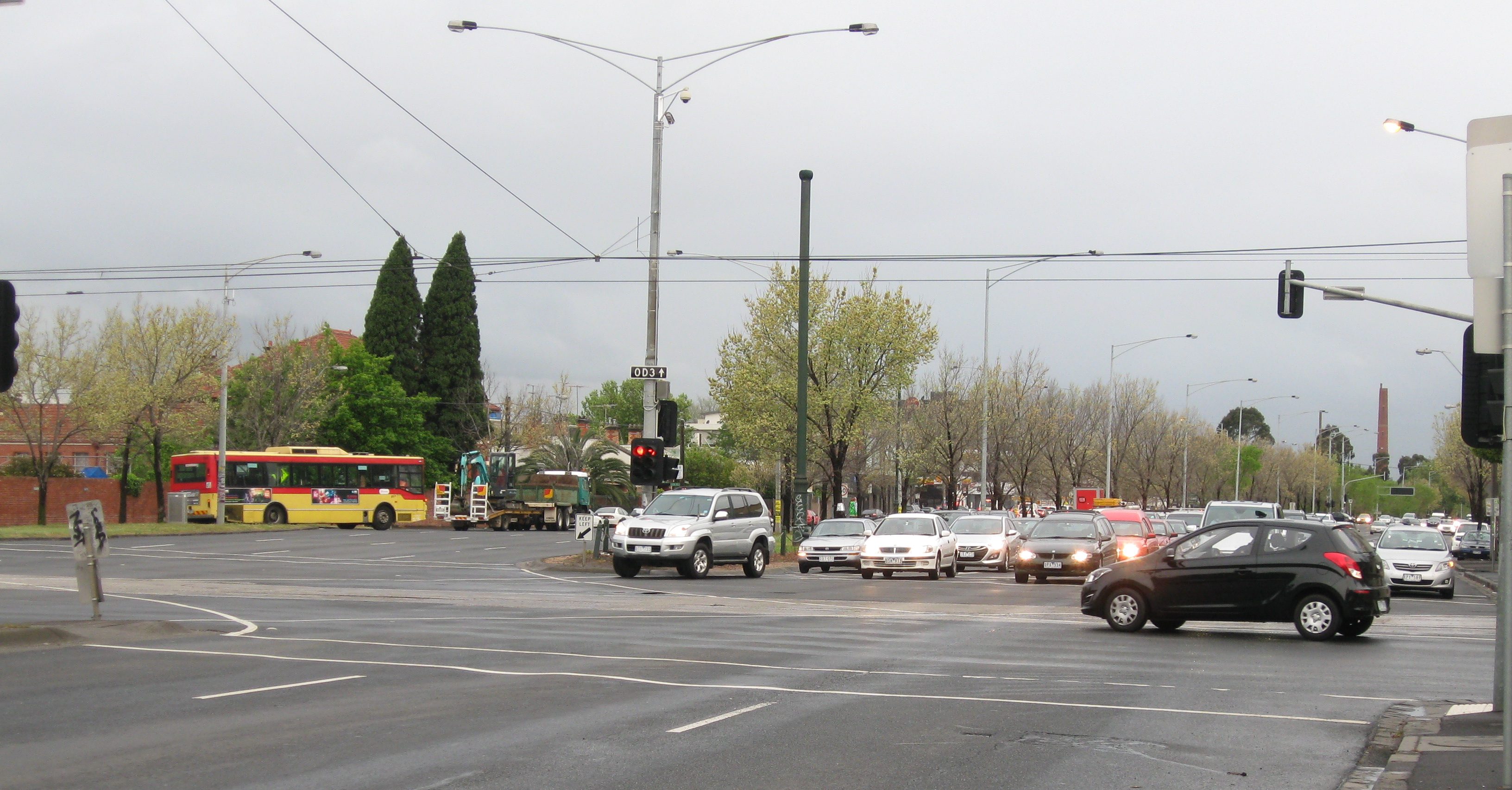
A street grid composed of VERY WIDE streets alternating with narrow streets. In my view this is the secret of Melbourne success.

Melbourne: Wide Street

Melbourne: Wide Street

Melborne: Very Wide Street

Melbourne: Very Wide Street

Wide streets allow multiple transport options to be used along one corridor, want to catch a tram, a bus, ride a bike, drive a car – it’s all there on the same street. No confusion about where to go to get some where, just find a wide


street. The streets don’t even need to be particularly attractive because they get the job done. The job being to move the maximum volume of people to where they want to go as efficiently as possible. Luckily or possibly through good design most Melbourne streets are quite attractive as well.

The alternating narrow streets follow the current trend in most cities, being pedestrianized and attractive for a variety of interactions. There are plenty of  shopping and entertainment options together with that critical city ‘vibe’ thing.

So that’s it, the secret of success. If your city is not blessed with super wide streets get out the bulldozers and make some, liveability will be yours. Just remember to leave plenty of narrow streets and lanes for that all important interaction.